 11
11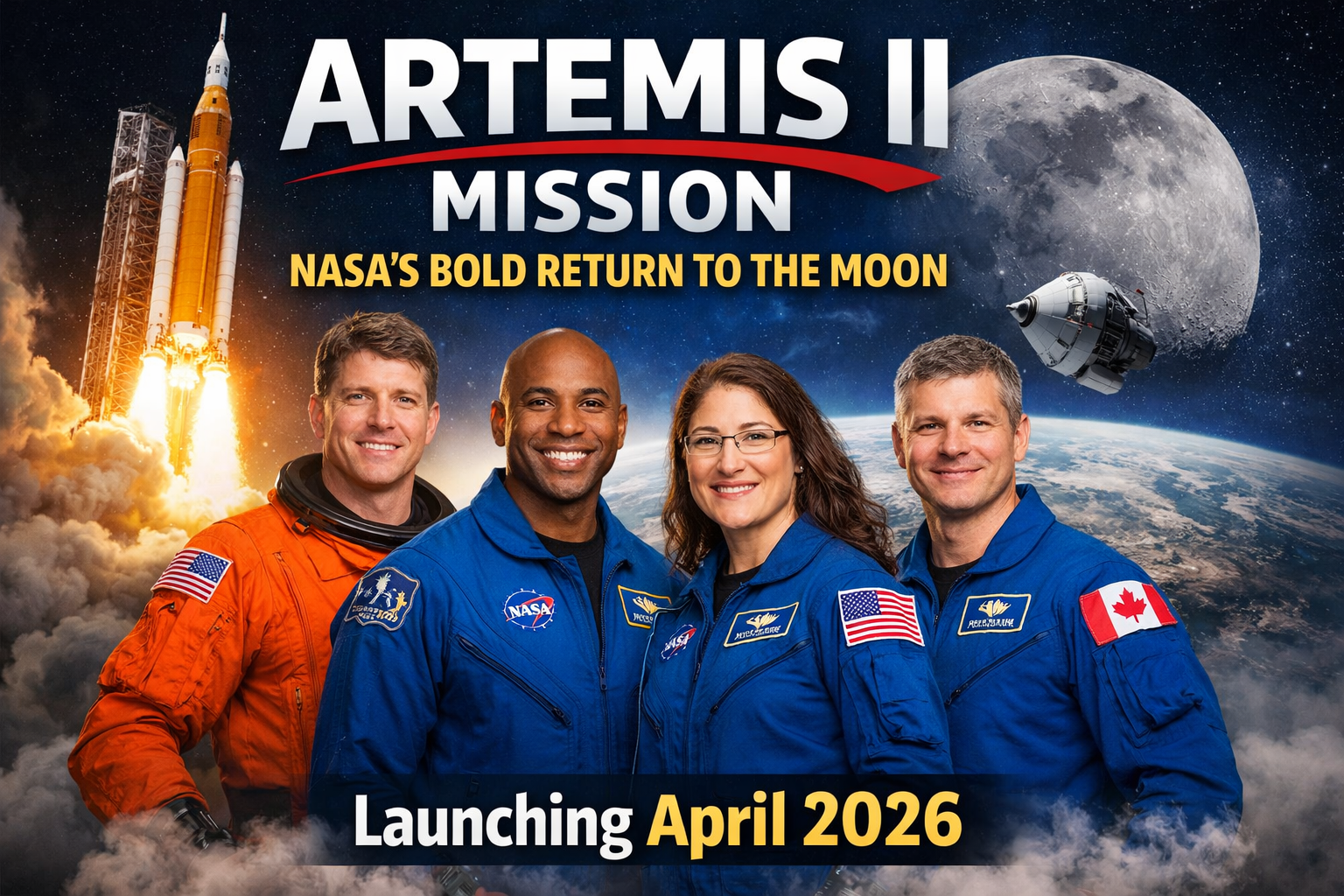
The global space race is entering a decisive new phase as NASA prepares for Artemis II, the first crewed mission to the Moon in over five decades. This mission is not just a technical milestone—it’s a strategic step toward long-term human presence beyond Earth.
With astronauts already arriving at Kennedy Space Center, anticipation is building for what could become one of the most defining missions of this decade.
NASA is currently targeting April 2026 for the launch of Artemis II.
This date represents a planned launch window, meaning it may shift slightly depending on safety checks, system readiness, and weather conditions. However, all current indicators suggest NASA is moving steadily toward this timeline.
Artemis II is the second mission in NASA’s Artemis program and the first to carry astronauts aboard the Orion spacecraft.
Unlike the uncrewed Artemis I, Artemis II will send humans on a lunar flyby mission, orbiting the Moon before safely returning to Earth.
In simple terms, Artemis II is the final test before humans step on the Moon again.

NASA has selected a highly experienced and diverse crew:
Artemis II relies on two of NASA’s most advanced systems:
Together, they form the backbone of future Moon and Mars missions.
All Artemis missions launch from Kennedy Space Center, specifically Launch Complex 39B.
This historic site has previously supported:
It continues to serve as NASA’s primary hub for human spaceflight operations.
A unique and engaging aspect of Artemis II is the introduction of a “Moon Mascot.”
While it may seem symbolic, it plays a real role:
This blend of science and storytelling helps make the mission more relatable worldwide.
Artemis II is not just another mission—it’s a gateway to the future of space exploration.
The Artemis program aims to:
In essence, Artemis II is the bridge between past achievements and future ambitions.
With a targeted launch in April 2026, Artemis II represents a major leap forward for humanity. It combines cutting-edge technology, international collaboration, and a bold vision for deep space.
If successful, it will open the door to a new era where humans don’t just visit the Moon—but stay, explore, and go even further.